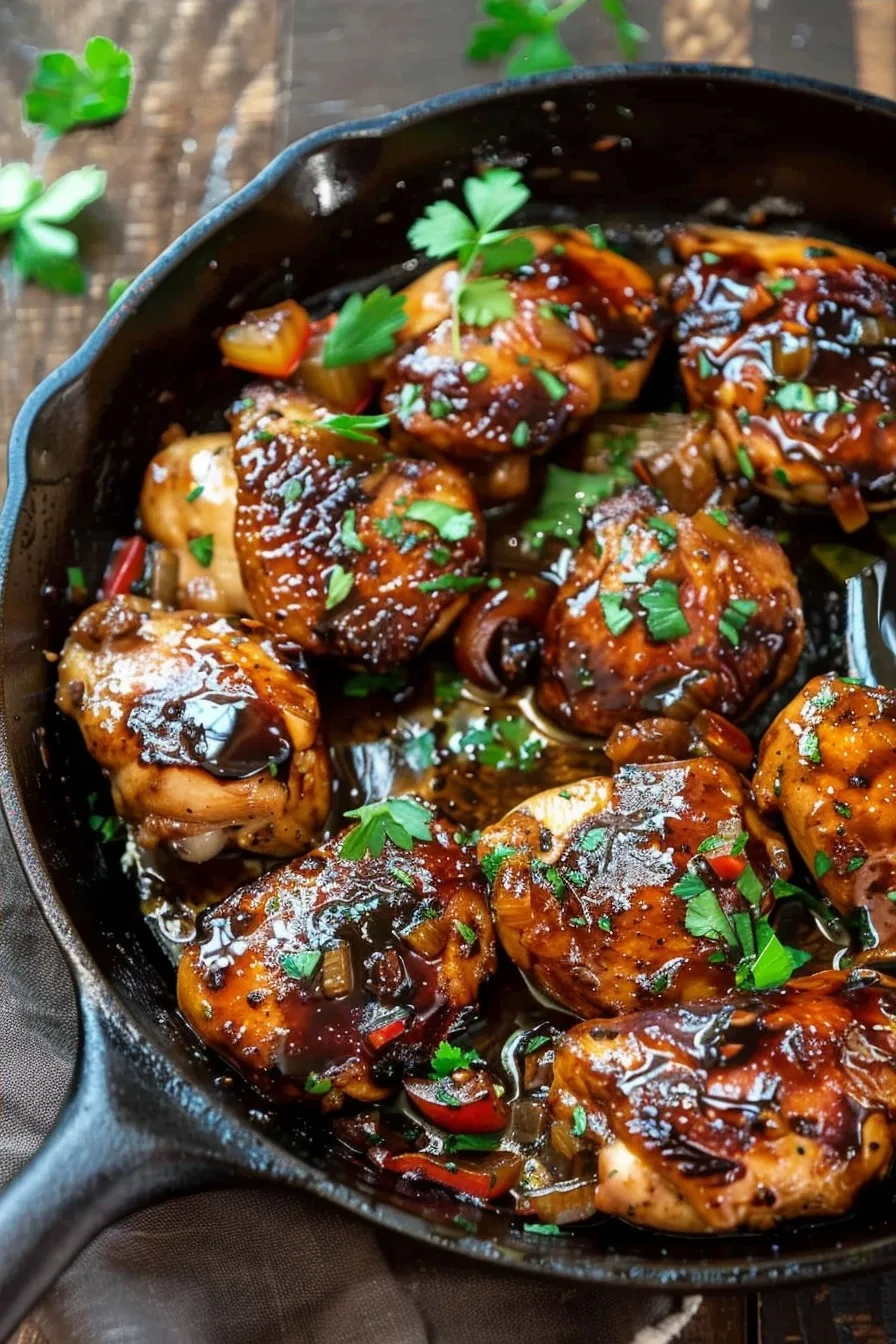
Balsamic glazed chicken skillet is a flavorful and savory main dish that combines tender poultry with a rich, tangy reduction sauce. This recipe relies on high-quality pantry staples to create a deep, complex flavor profile that elevates a simple chicken dinner into a restaurant-style meal. You will find this dish becomes a reliable favorite in your home kitchen routine.
Introduction to Balsamic Glazed Chicken Skillet
This dish features succulent chicken thighs bathed in a luxurious sauce crafted from aged balsamic vinegar, aromatics, and a touch of sweetness. The glaze caramelizes during the roasting process, creating a sticky, dark coating that clings perfectly to every piece of meat. You will notice an enticing aroma of roasted garlic and fresh herbs that fills your kitchen while the dish cooks in the oven. The contrast between the crispy edges of the chicken and the velvet smooth glaze offers a texture profile that is truly comforting and deeply satisfying.
The culinary roots of this dish draw inspiration from Mediterranean cooking, where simple ingredients are transformed through proper heat application and ingredient balance. Unlike many heavy cream-based sauces, this version relies on the reduction of balsamic glaze and tomato paste to provide depth and body without feeling overly indulgent. This unique approach allows the natural quality of the chicken to shine while providing a sophisticated flavor profile that stands apart from standard roasted chicken recipes. You will appreciate the clever use of pantry items like sweet paprika and oregano to round out the flavor profile effectively.
Busy professionals and home cooks seeking an efficient yet impressive meal will find this recipe aligns perfectly with their needs for quality and convenience. It suits casual weeknight dinners where time is limited but the desire for a homemade meal remains high and central to the household experience. Once you experience the ease of preparation and the consistent quality of the final result, you will want to add this dish to your permanent rotation. Your family will appreciate the robust flavors and the way this skillet meal presents beautifully on the dinner table every single time.
Why You’ll Love This Recipe
The star technique of this dish is the quick balsamic marinade that doubles as a flavor-packed glazing agent during the oven roasting phase. By whisking the tomato paste with honey and balsamic glaze, you build a foundation that balances acidity with natural sugars. This simple step ensures that each piece of chicken receives a consistent coating that browns and caramelizes beautifully as it cooks through.
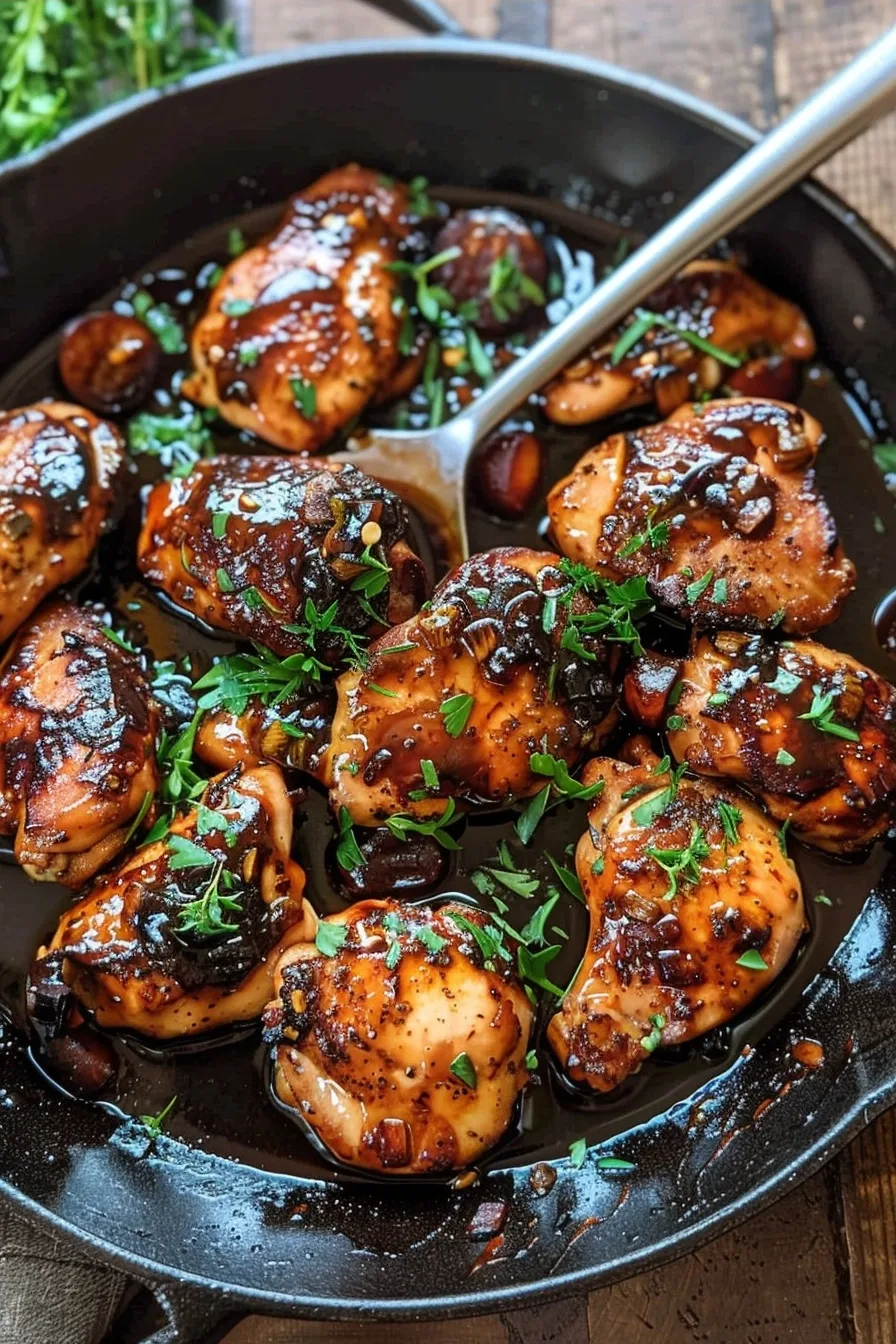
Texture contrast is a major highlight of this recipe as the skinless thighs remain incredibly juicy while the surface develops a delightful, concentrated glaze. The visual appeal of the dark, glossy finish makes this dish feel like a gourmet offering despite the straightforward nature of the preparation. Every bite provides a satisfying combination of savory, sweet, and herbal notes that leave you feeling perfectly nourished and satisfied after the meal.
The Perfect Weeknight Dinner
Achieving a high-quality dinner in under 45 minutes is simple with this skillet method that requires very little active time or constant kitchen monitoring. The oven does most of the heavy lifting, allowing you to prepare a side dish or finish other tasks while the chicken develops its signature deep mahogany color. You will enjoy how the straightforward steps eliminate stress and ensure that a delicious protein is ready exactly when the family is hungry for dinner.
Meal planning becomes significantly easier when you rely on recipes that utilize basic ingredients already present in your pantry or refrigerator staples. Beginners will find the process incredibly forgiving, as the oven roasting technique prevents the common pitfalls associated with stovetop sautéing or pan-searing. Whether you are cooking for a large group or preparing extra portions for future lunches, this reliable recipe will consistently provide excellent results with minimal effort required from the cook.
Ingredients Needed for Balsamic Glazed Chicken Skillet
Main Ingredients
These essential components provide the structural and flavor foundation necessary for a perfectly balanced balsamic chicken dish that the whole family will love.
| Ingredient | Quantity | Notes |
|---|---|---|
| Chicken Thighs | 8 pieces | Provides the juicy protein base. |
| Olive Oil | 1/4 cup | Adds healthy fats and richness. |
| Balsamic Glaze | 3 tablespoons | Delivers the signature tangy depth. |
| Tomato Paste | 1 tablespoon | Contributes umami and sauce body. |
| Honey | 1 teaspoon | Balances acidity with sweetness. |
| Lemon Juice | 1 fresh lemon | Brightens the overall flavor profile. |
| Garlic Cloves | 4-5 cloves | Provides essential aromatic punch. |
| Fresh Thyme | 1 tablespoon | Adds earthy, herbal undertones. |
| Dried Oregano | 1 teaspoon | Supplies classic Mediterranean flavor. |
| Sweet Paprika | 1/2 teaspoon | Offers color and mild smoke. |
Optional Add-Ins
Customizing your skillet meal allows you to adjust the final texture or flavor profile to suit your specific preferences on any given night. Consider these additions if you want to introduce extra layers of color or texture to your finished balsamic glazed chicken.
| Ingredient | Quantity | Notes |
|---|---|---|
| Cherry Tomatoes | 1 cup | Adds bursts of fresh sweetness. |
| Red Onion | 1 medium | Contributes savory, soft crunch. |
| Baby Spinach | 2 cups | Introduces vibrant color and greens. |
| Pine Nuts | 2 tablespoons | Provides a buttery, crunchy finish. |
Ingredient Substitutions
Adapting this recipe with common alternatives ensures you can still enjoy this dish even when your kitchen supply is running low on specific items.
- Chicken Thighs: Use boneless chicken breasts if preferred, though you must reduce the baking time to ensure they do not become dry.
- Honey: Maple syrup or agave nectar can replace honey to provide a similar level of sweetness to the glaze.
- Dried Oregano: Fresh marjoram or basil works well as a substitute to offer a different but equally pleasant herbal flavor profile.
- Balsamic Glaze: Combine balsamic vinegar with a small amount of brown sugar and reduce it on the stove if you lack store-bought glaze.
Step-by-Step Cooking Instructions
This method focuses on creating a high-flavor environment by marinating the chicken quickly before roasting it at a high temperature to develop the glaze. Follow these clear phases to achieve tender, flavorful results every single time you prepare this meal in your own kitchen.
Preparing the Protein and Marinade
Start by taking a large mixing bowl and whisking together the olive oil, balsamic glaze, tomato paste, honey, and fresh lemon juice until smooth. Incorporate the minced garlic cloves, fresh thyme, dried oregano, and sweet paprika into the mixture, ensuring everything is well combined and fragrant. Pat your boneless chicken thighs completely dry with paper towels to ensure the marinade clings to the surface without sliding off during the cooking process. Season the meat generously with kosher salt and black pepper on both sides to enhance the natural flavors of the chicken before adding it to the bowl. Toss the seasoned chicken in the balsamic mixture until each piece is thoroughly coated, then set it aside to rest briefly while your oven preheats.
Roasting for Perfect Glazing
Preheat your oven to 425 degrees Fahrenheit and adjust the center rack to ensure even heat distribution for the best possible roasting results. Transfer the coated chicken pieces into a heat-safe skillet or a shallow baking dish, arranging them in a single layer for uniform cooking. Place the skillet in the center of your preheated oven and bake for approximately 25 to 30 minutes until the edges appear slightly charred and crispy. The glaze should look thick, glossy, and dark, while the internal temperature of the chicken must register at 165 degrees Fahrenheit for safety. Remove the dish from the oven and let it rest for five minutes, allowing the juices to redistribute and the glaze to thicken further before serving.
Pro Tips
Maximizing the results of this recipe involves paying close attention to the details of temperature and timing throughout the cooking process. Follow these expert suggestions to elevate your final dish from standard to truly memorable for your friends and family members.
- Use fresh herbs whenever possible, as the volatile oils provide a much brighter aroma than their dried counterparts. If you must use dried, crush them between your palms before adding to the marinade to release hidden oils.
- Pat the chicken very dry before applying the marinade to ensure the sauce adheres perfectly to the meat surface. Moisture on the chicken exterior can dilute the glaze and lead to steamed meat rather than beautifully caramelized pieces.
- Bring the chicken to room temperature before placing it into the oven to ensure even cooking from the center to the edges. Cold chicken can cause the exterior to overcook while the inside remains underdone, resulting in uneven textures.
- Keep a close eye on the balsamic glaze during the final five minutes of baking to prevent the honey and sugars from burning. If you notice the edges darkening too quickly, lightly tent the dish with aluminum foil to protect it.
- Allow the dish to rest for at least five minutes after removing it from the oven to let the glaze thicken and cool slightly. This brief waiting period ensures the sauce clings to the chicken rather than running thin on your serving plate.
The most important technique in this recipe is the high-heat reduction of the balsamic marinade during the final phase of roasting. High temperatures at 425 degrees Fahrenheit allow the sugars in the balsamic and honey to caramelize rapidly into a sticky, concentrated coating. Mastering this heat level transforms a basic marinade into a deeply flavorful glaze that defines the character of the entire dish.
Serving Suggestions and Variations
Pairing with Sides
Selecting the right side dish enhances the savory notes of the balsamic chicken without overwhelming the delicate balance of the glaze. Serve this dish alongside Roasted Garlic Mashed Potatoes to provide a creamy counterpoint that soaks up the excess sauce beautifully. A crisp side of Lemon Herb Quinoa offers a light, fluffy texture that complements the intensity of the balsamic reduction. Adding a side of Garlic Butter Green Beans introduces a fresh, crunchy element that rounds out the nutritional profile of your complete meal.
Creative Variations
Introduce heat to your dish by adding one teaspoon of crushed red pepper flakes to the initial marinade before tossing the chicken. This simple adjustment creates a spicy contrast against the natural sweetness of the honey and balsamic glaze, appealing to those who enjoy a little extra kick. You can easily adjust the amount based on your preference for heat intensity without altering the rest of the cooking instructions.
Swap the chicken thighs for chicken breasts if you prefer a leaner protein, but remember to watch the cooking time closely to avoid drying out the meat. You could also experiment with bone-in, skin-on chicken thighs, which provide an even richer flavor and a crispier texture upon roasting. These adjustments do not change the core flavor profile but offer a different experience for guests who prefer specific types of poultry cuts.
For more delicious meal ideas, explore our recipes for Herb Roasted Root Vegetables or Honey Glazed Salmon. If you want a classic, comforting pairing for dessert after this savory dinner, consider serving Classic Vanilla Bean Panna Cotta. The creamy, cold finish of this dessert balances the savory notes of the balsamic chicken perfectly for a complete experience.
FAQ
How can I substitute balsamic glaze if I do not have any on hand?
You can substitute store-bought balsamic glaze by simmering one cup of balsamic vinegar in a small saucepan over medium heat. Continue to cook the vinegar until it reduces by half and reaches a thick, syrupy consistency that coats the back of a spoon. This homemade reduction provides the same depth and sweetness as the bottled version, ensuring your recipe succeeds. Be sure to let the reduction cool slightly before mixing it into your marinade ingredients.
Is this balsamic glazed chicken skillet recipe suitable for a vegetarian diet?
This specific recipe is designed for meat-based proteins and is not suitable for a vegetarian diet in its current form. You could experiment by substituting the chicken with hearty, thick-cut portobello mushrooms or cauliflower steaks to create a vegetable-forward version of the dish. If you choose to use vegetables, reduce the roasting time to 15-20 minutes so the ingredients remain tender without losing their structural integrity. These vegetable alternatives absorb the balsamic glaze wonderfully, offering a similar flavor experience without the meat.
How long can I store leftovers of this chicken safely?
Leftover chicken can be stored safely in an airtight container in the refrigerator for up to three days after the initial preparation. To reheat, place the chicken in a skillet over low heat with a splash of water to loosen the glaze without burning the sugars. You should ensure the internal temperature reaches at least 165 degrees Fahrenheit during the reheating process to maintain food safety standards. Avoid leaving the chicken out at room temperature for more than two hours to prevent quality degradation.
Can I prepare the chicken marinade in advance to save time?
You can certainly prepare the marinade and store it in the refrigerator for up to 24 hours before you intend to cook the chicken. Putting the chicken in the marinade a few hours before roasting allows the garlic and herbs to penetrate deeper into the meat, yielding a more flavorful final product. Simply whisk all the ingredients together in a container and keep them chilled until you are ready to toss the chicken and begin the roasting process. This approach is an excellent strategy for busy weeknights when active kitchen time needs to be minimized.
Why does my balsamic glaze taste bitter instead of sweet?
A bitter taste in your balsamic glaze usually occurs when the sauce is heated for too long or at a temperature that is too high for the sugar content. Ensure your oven temperature is set precisely to 425 degrees Fahrenheit and monitor the chicken during the final minutes to avoid scorching the honey. If you notice the edges of the dish turning too dark early on, tent the skillet with aluminum foil to protect the sauce from excessive heat. Maintaining the balance between caramelization and burning is the key to achieving the desired sweet and tangy finish every time you cook this dish.
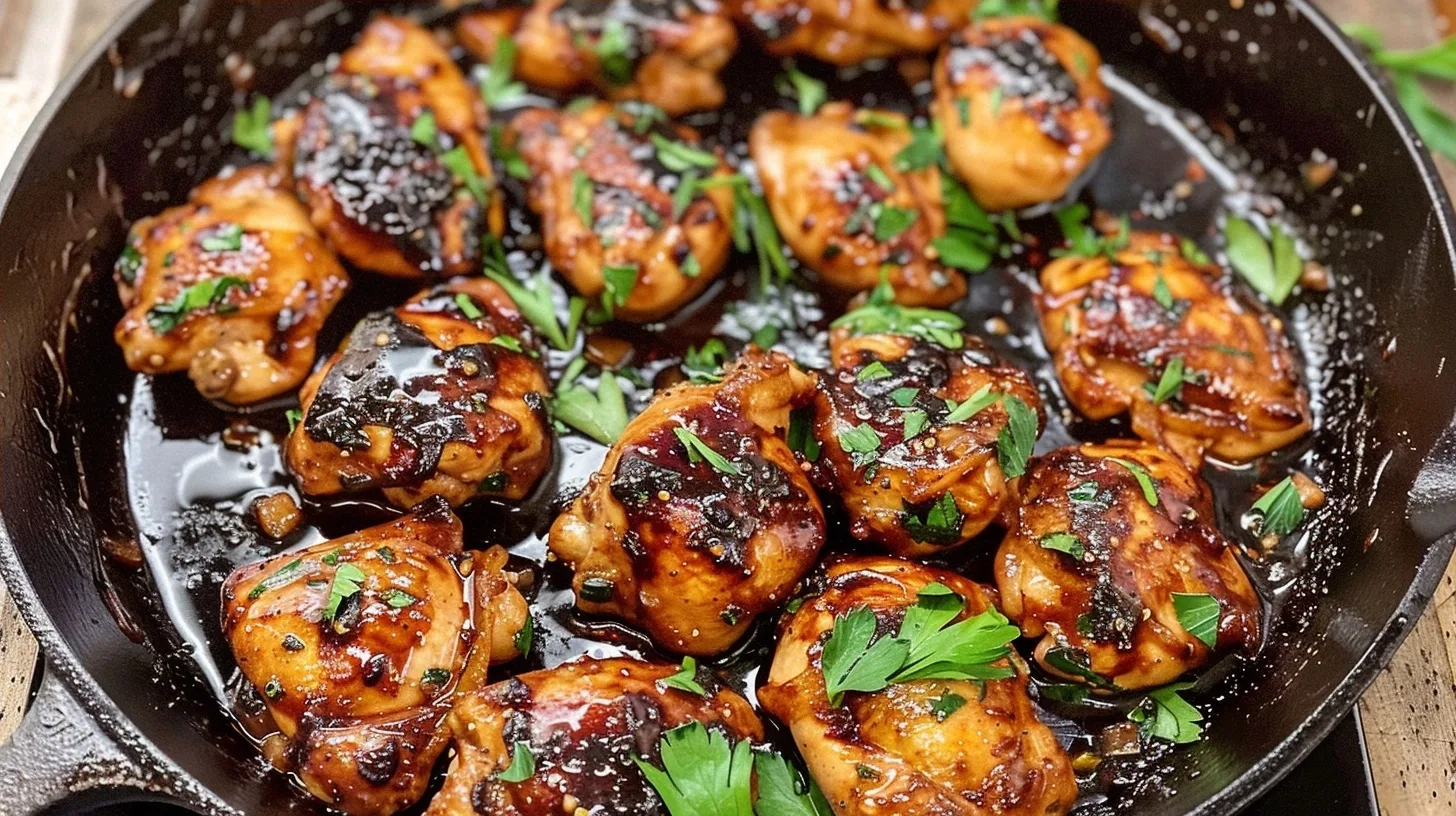
Balsamic Glazed Chicken Skillet
Ingredients
Method
- Preheat your oven to 400°F (200°C).
- In a small bowl, whisk together balsamic vinegar, tomato paste, honey, minced garlic, oregano, and paprika.
- Season the chicken thighs generously with salt and pepper.
- Heat olive oil in a large oven-safe skillet over medium-high heat.
- Sear the chicken thighs for 3-4 minutes per side until golden brown.
- Pour the balsamic glaze mixture over the chicken, ensuring each piece is well-coated.
- Transfer the skillet to the preheated oven and roast for 15-20 minutes until the chicken is cooked through and the glaze is thick and sticky.
- Remove from the oven, garnish with fresh parsley, and serve hot.